A little natural history
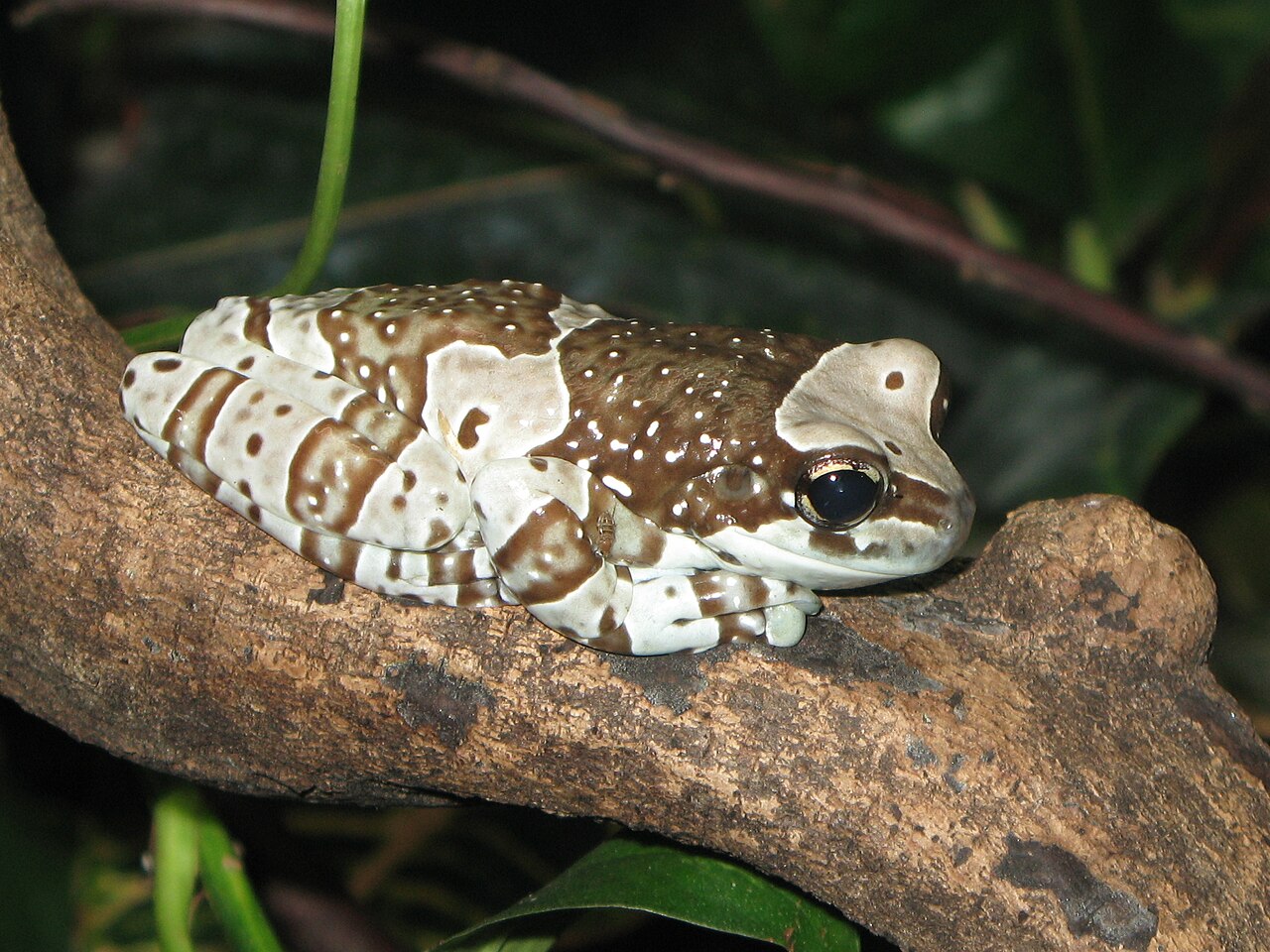
A large Amazonian tree frog with bold pale-and-dark bands. Wild breeding occurs in water-filled tree cavities; a climbing lifestyle and substantial adult size make enclosure planning important.
The wonderfully odd bit
The milk in its common name refers to defensive whitish skin secretions.
Would this frog suit a home?
Provide a tall, secure, well-ventilated enclosure with strong perches, clean water and suitable insect prey. Limit handling because stress can provoke irritating defensive secretions.
Only consider legally obtained, captive-bred animals. Check permits and restrictions where you live, test the habitat first, and arrange an amphibian-experienced vet. This brief profile is not a complete husbandry sheet.
Read the species-specific care guide ↗
A note on names
Other names you may encounter: Brazilian milk frog; mission golden-eyed tree frog. Taxonomic names change; older care resources may use earlier combinations.